Information

Hello and Good day!

At the moment, we are most busy and are unable to post newer articles nor reply to any concerns at our blog. Rest assured that in the future there will be developments regarding this advocacy and will be posted for all the readers out there.

Thank you for your understanding and continuing patronage.

Leave a comment

Filed under Uncategorized

Nelson Mandela, Icon of Freedom, Culture and Dignity.

Who would even know that a boy, who would be born in a farm province of Transkei South Africa, would soon become its first black President?

Xhosa males undergo circumcision rituals

Xhosa males undergo circumcision rituals


Born on July 18, 1918, Nelson Mandela, popularly known as “Madiba” among his close kin and friends, was destined to lead his people out of an abusive and inhuman political regime called apartheid.
Reared up in the traditions of his Xhosa tribe, his father was the stern chieftain of the clan, a descendant himself of the great Xhosa warriors, who had first confronted the onslaught of the white invaders during the early days in Cape Town.
Nelson grew and lived at a time of political regime of apartheid. A vicious cycle of inhumanity perpetrated by the Boer government of South Africa that had undoubtedly shaped his political aspirations for a free South Africa.
The Boers of today in South Africa were the next-in-generation descendants of these original Dutch colonizers that arrived in the 17th Century. The Dutch East Indian company came in with their big ships from Europe and exploited the trade of South Africa’s resources particularly gold, diamonds, livestock and many other timber resources. With Cape Town as their entry point and base for operations, they exported not only South Africa’s natural bounty but also slaves. Many of these slaves come from the conquered peoples and would eventually find their way into aristocratic Europe. Tradesmen, military officers and even mercenaries from all parts of the European continent including the German, British and Dutch privateers also brought in their superior weaponry that brought holocaust to many of these tribes to the extent of driving many of these African peoples into the interior, and thereby taking over their thousands of acres of fertile pasture lands. To compound the situation, these “white men” also brought in not only their superstitions and beliefs but also all manner of diseases which were virtually non-existent in the South of Africa. South Africa was devastated.
To put it figuratively, the straw that broke the camel’s back was the apartheid regime imposed on South Africa. Apartheid was a social evil that was characterized by the subhuman treatment of the black peoples. More prejudiced than the meaning of prejudice itself. South Africans were treated and herded like animals, bereft of any identity or individualism. The Boer government then in the 1950, under Prime Minister Verwoerd, introduced a law that would set an even more dangerous precedent of human rights abuses against many of the South African populations. The Population Registration Law, which was enacted in that year, required the classification of South Africans by race and by color. Simply put, if you were a colored individual, you had less or no rights at all. There was even a law on the Prohibition of Mixed Marriages of 1949 which decreed that people belonging to different races could not marry and worse, it broke up then existing relationships where husband and wife were of different races. The consequences were severe under these prohibitions. Even the educational system was inhuman. It brainwashed young students that they were inferior and had no place in a modern white society. There was racial segregation and prejudice in food, jobs, labor, education and even in choosing of home neighborhoods. There were pasted signboards that say, “CAUTION, BEWARE OF NATIVES”. These signs were prominently seen and documented at Johannesburg.
By this time, Nelson Mandela, already a lawyer on his own right, joined the Defiance campaign against the government. To conduct an even more effective campaign against the evils of apartheid, he proposed as one of the leaders of the African National Congress in 1953, that a shift in strategy from peaceful civil disobedience to an actual armed revolt by the people. He even went as far as going to China to seek for arms support, to which the Chinese said no.
fighting for freedom

fighting for freedom


In 1956, he was finally arrested after having tried many successful attempts to evade government authorities. Together with many of his revolutionary compatriots, they were imprisoned at the infamous Robben island prison. Here, Mandela was to spend twenty seven (27) years of his life in isolation from his own family, friends and from his people. He was intermittently tortured along with the others, maltreated and deprived of many basic privileges such as having a good meal or wearing decent clothing. He was on occasion, according to his memoirs, beaten or embarrassingly electrocuted. Undoubtedly, Nelson Mandela suffered as any other human being should have.
mandela-nugget
Contrasting the depravity he and his prison mates experienced, it was also on this island prison that he learned more about the world and especially of himself. He befriended the library staff so that he was always given good books to read and thereby acquaint himself with western philosophy, literature and modern thought. Everyday, while being in prison, he made it a point to develop good habits such as a daily exercise routine, reading, discussion of knowledge among friends and inmates and being friendly with the guards. He ultimately turned despondency into hope.
Though the beatings never did stop at once because of his outlook, Nelson Mandela by his own confessions was a changed man inside.
Surprisingly bowing to world pressure, the more sympathetic South African President F.W. de Klerk announced the release of all South Africa’s political prisoners, Mandela included.
And in 1994, when the first national democratic elections were held in South Africa, Mandela, already seventy-five years old at voting time, came out the winner. His triumph over the elections virtually ended the three hundred years of the so called white rule and suppression in South Africa.
Apartheid on that day, ceased to have any more meaning.
At his inaugural speech heard all over the world, he said, “Never, never and never again shall it be that this beautiful land, will again experience the oppression of one by another and suffer the indignity of being the skunk of the world”.
Echoing the deep, wise and richly-textured voice of South Africa’s triumphant new leader, nine jet fighters from the South African Air Force streaked overhead in aerial salute.
All of Africa roared in victory.
nelson_mandela
Oprah Winfrey, an American talk-show host, who once made a television special about Nelson Mandela, asked him to what was his secret to overcoming the misery and pain of being imprisoned. Of how he was able to nurse himself despite the odds of being tortured and almost beaten to death.
Mandela replied, “Every time the prison guards would beat me up, I would always think that the beating was God’s way of removing all the pain and misery from my body and that I was to become a better man afterwards.”
From the people behind Dabawenyong Lumad, we deeply extend our condolences to the bereaved family and kin of Nelson Mandela and similarly mourn at this time for the passing of a great man.
Nelson Mandela, from the plains of the great South Africa, straight into our hearts.
nelsonmandela_dl1.jpg world news
Farewell, Madiba!

all images courtesy from internet

Leave a comment

Filed under Tribute

Kausaban

Samtang nagkadugay, nagkaanam na ug kawala ang mga lumadnon nga mga batasan diri sa atoang mga kalumaran nganhi sa rehiyon sa Dabaw. Gikan pa sa pagsakop sa atoa sa mga Katsila atong 1570, daghan na gayud ang nanahimong kausaban sa kinabuhi sa mga lumad ilabi na diri sa atoang dapit. Gikan sa pagsinina, panghuna-huna o pamatasan sa mga tawo, murag dili na gayud mao sa sinugdanan. Sanglitanan, kana bang “pag-amen” o kanang gi-nganlan sa mga tagalog pa og, “mano po lolo,” dili man kana apil sa kustombre sa mga lumad o mga Bagobo. Kining pag-amen o kining pag-mano, bag-o na ni siya nga pagpaila nga batasan nga naandan sa mga kristiyanos. Og boot natong huna-hunaon, kining pag-amen adunay kalambigitan sa mga ritwal sa mga Romano Katoliko nga mag-amen sa mga hari, emperador, obispo o santo papa ngadto sa nasod sa Europa. Nagpahulagway lamang kini nga masunoron ang mga kristiyanos sa mga lider nga nangulo kanila. Mao bitaw nga gitawag silang mga “sakop sa imperyo sa Katoliko Romano”. Kon sa Ingles pa, “subjects of the Roman Catholic empire”. Kinahanglan gayud sila magpakita og ilahang kamaunongon sa ilahang mga amo. Ang pag-amen o pagduko ba ang nanahimong sukaranan sa ilahang pagka-lungsoranon.

Pero sukuahi kini sa atoang naandan diri ilabi na sa tradisyong lumad. Ang naandan sa mga lumad kanang pagtawag og, “Apo” dayon isumpay ang ngalan sa Datu o kon kinsa bang tiguwang sa barrio o poblacion. Ma-babaye ba o lalake ang gitawagan. Ang sistema sa paggawi sa “Apo” maoy naghatag og pagtahud sa niining mga tawhana.

Kaniadto usab, sa wala pa kita nanahimong koloniya sa Espana og Amerika, aduna pa og maayong pagtagad o paminaw ang mga kabatan-onan sa mga katiguwangang lumad o sa gitawag nga mga buyyag sa mga bagobo. Apan karon, sa panahon sa maka-modernong mga butang og kinaiya, hinay-hinay ng kawagtang ang mga maayong pamatasan sa pagtinahod og pagpaminaw. Dili kay sama kaniadto, maminaw pa sila sa mga pagtulon-an sa ilahang mga katiguwanggan. Mga mahinungdanon nga pagdiskursohanay, hisgutanong kasaysayan, apil na ang uwahingan (mythical stories) sa mga bagobo. Karon, ang maestro og libro naman hinuon ang ilahang paminawon.  Og labot pa, telebisyon, radyo og komiks na lamang ang pirmi nilang atubangon sa matag-adlaw. Unya, ang matang sa edukasyon karon mapribado man o mapubliko, wala na magahatag ug pagtagad sa mga lokal nga mga kasaysayan o “indigenous history”. Mga langyaw nga kaalam na lamang ang kanunay iduso sa atoang mga tulunghaan, og wala na kini gilabot kaayo ang pang kaugalingon.

Murag timailhan kini sa pagbag-o sa atoang kalibutan. Dili lang kay kita ang nakasinati niining pagusab-usab. Apil na pud kining mga nasod nga nanahimong koloniya sa Amerika, Espana og Briton, nga mga makakagahum nga nasod sa tibuok kalibutan. Kining mga nasura nga gisakop, apil na ang Indonesia, Malaysia, Cambodia, South America, India og bisan Hawaii. Pila ka libo na ang mga kinabuhing nausik mahitungod sa pagpanalipod sa mga katungod sa mga lumulupyo niining mga nasura. Wala pay labot ang mga naapil og kamatay sa una og ikaduhang gubat sa kalibutan. Sa ulahi, tungod sa pagsakop sa kining mga nasura, giusab sa mga “koloniyal nga puwersa”o “colonial powers” ang mga kapalaran sa mga nasod na gisakop.

Masulob-on gayud kaayo ang kapalaran sa mga sinikop. Mouyon uyon na lamang sila sa mga mananaug nga lumalangyaw tungod sa kahadlok. Gawas pa niini, napugos nalang pud sila sa pagdawat sa mga butang nga wala nay kalabutan sa ilahang kaugalingong kultura og mga kinaiya. Many of them were forced to learn the language and ways of their colonizers, but worse, they have even learned to shun what was originally their own. Thus, many of them adopted the ways of their conquerors. They have, so to speak, had become strangers to their own land and to their own culture. Sa laktod nga pagkasulti, nanahimo na silang mga dumoduong o estranghero sa ilahang mga kaugalingon.

Tinuod, nanahimong kabulahan ang modernong panimuyo og edukasyon sa katawhan, ilabi na sa usa ka nasod nga nasikop sa mga dagkong puwersa, sama sa Pilipinas. Apan dili gihapon mamahimong pagpangatarungan ang pagkabiya sa mga gikabilin sa atoang mga apuhan sama sa mga naandan nga mga kustombre o kinaiya nga gikausik nila ug panahon, paningkamut og kinabuhi.  Ilabi na kadtong mga panahon sa pakigbisog og pakiggubat sa mga kolonyal nga puwersa.

Nahinumdom ko sa giingon ni Jose Rizal. Matud pa niya, nga bilihon gayud ang pagdasig sa atoang nasyonalismo pinaagi sa pagpag-amping sa kaugalingon, og paglikay sa mga langyaw nga mga butang nga makadugmok og makapaguba sa atoang nasod. Kon sa Ingles, “Aspire to be a nation by conserving what is your own. Should you seek to occidentalize your customs, you seek suicide, the destruction of your nationality, the annihilation of your fatherland.”

Sa katapusan, ako na lamang gihangyo sa akoang mga kaigsoonang lumad, ilabi na kadtong mga kabatan-onan nga makatungtong na og mga modernong tulunghaan, nga manimbasog gihapon sa pag-amping sa inyohang mga kaugalingon, kay dili na baya mabalik ang lakang sa panahon. Tun-i gihapon ninyo ang mga kustombre sa atoang mga apuhan og isugakod gayud nato kutob sa mahimo ang kahibulongan sa atoang matahum nga kultura. Kitang tanan, adunay katungdanan nga magpatunhay sa mga butang nga gikabilin kanato.

Kalinaw.

Leave a comment

Filed under Opinion and Resistance

Katalagman sa Bohol

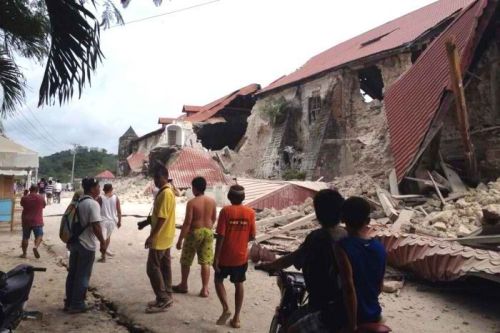
Pirti gyud kapait sa kahimtang karon sa mga lumulupyo sa Bohol. Bag-o pa jud og pila ka adlaw pa lamang, miigo ang kusog nga linog sa isla nga mikabat kuno og 7.2 magnitude sa richter scale. Nahitabo kini atong Martes sa buntag, sa petsa kinse karong bulana.
Sumala pa sa mga sayantipiko o mga seismologists, usa kini nga panghitabo nga ngilngig kaayo ilabi na kon itandi sa kasaysayan sa mga katalagman sa atoang nasud.
Dungag pa sa mga balita, daghan kaayong mga balay ang nangatumpag og mga tanum nga nanga daot tungod sa kakusog sa linog. Daghang mga tulay og karsada ang mga nanga hagsa.
Gawas sa pagkawala sa mga puy-anan sa mga tawo, nawad-an pud sila og suga, kuryente, suplay sa tubig og pagkaon.5023444-3x2-700x467
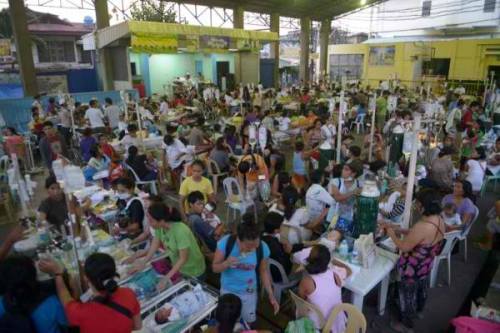
Matud pa sa mga istorya sa internet, nagtukod nalang uruy sila og mga “makeshift tents” sa gawas. Unya sobra na pud sa usa ka gatos ang mga nangamatay diri.
Ang resulta niining panghitabo-a: ang pagka-undang sa komersiyo o pagpatigayon sa Bohol tungod sa kakuyaw, kahadlok og grabeng konsomisyon.
Sa pagkakaron, duol na kuno sa otsenta ka milyones pesos(80 million pesos)ang suma total sa danyos sa Bohol.
Unya kay murag maigo man pud ang isla sa Bohol sa “earthquake fault line”, aduna daw og kalagmitang mahitabo pa usab ang linog.
Bohol Earthquake refugees
Simba ko!
Hinaot nga dalian pa unta sa atoang nasyonal nga kagamhanan ang paglihok og paghatag og hinabang sa atoang mga kaigsoonang Bol-anon nga nag-antos karon.
Kami diri sa Dabawenyong Lumad magpabiling maga-ampo kaninyo og nakigduyog sa inyong kaguol.

Leave a comment

Filed under Opinion and Resistance

Dam-mag

A Time of Passing

The passing of a loved one is always a sad affair among tribal peoples. Just like with other faiths, cultures and societies around the world, death heralds the transition of a soul from his earthly life towards the great beyond. From mortality to the immortal world.

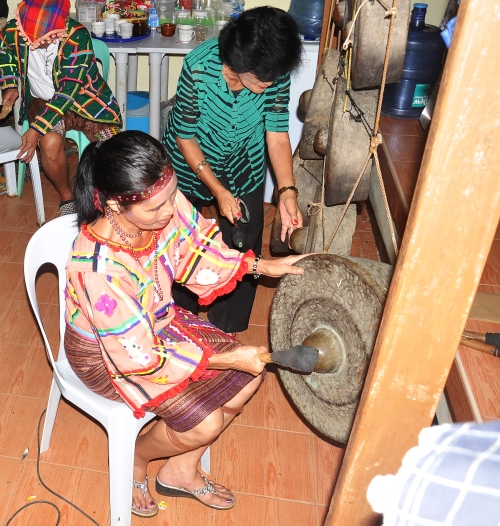
woman playing agung

woman playing agung


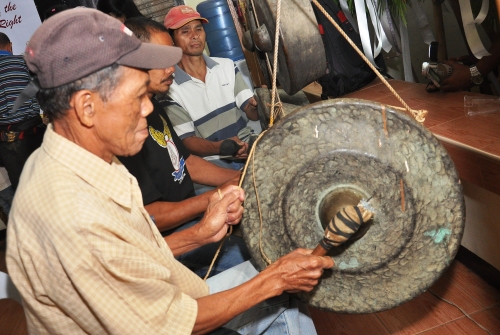
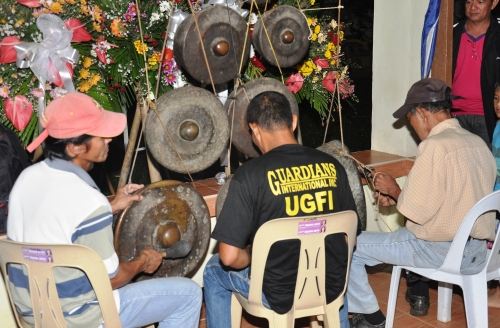
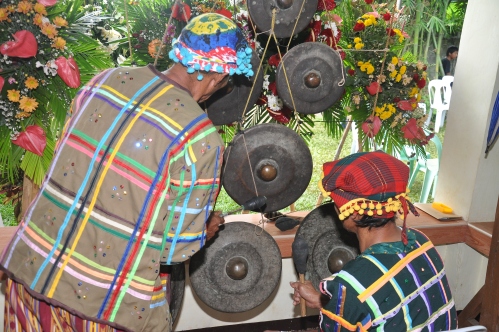
Among the Bagobo people, there are many practices as well as prohibitions during time of death. Chief among these practices is a musical ritual called “dam-mag”. During wakes, the dam-mag would be played announcing a death in the community. The playing involves the constant tapping of two large gongs usually in the same beat fashion and tempo, with a tapping instrument called ‘tap-tap”.
portrait

portrait


In the olden days as it is today, the dam-mag informs the people of the community of a death of a friend, neighbor and to someone even more important, a Chief or a Datu. Furthermore, the musical reverberation of the agung draws people from across mountains, rivers and valleys to congregate during the sad tidings.
a ritualist plays the dammag death ritual

a ritualist plays the dammag death ritual


During this time, it is expressly forbidden for the immediate family or any member thereof to take part in the ceremonies, rituals, or in the serving of the relatives and guests. Bagobos believe that should an immediate member of the family of the deceased even take part in the ceremony of the dam-mag, it would be tantamount to a making of a plea for those departed to take him with them in the after-life. This is a taboo that is being enforced among the Davao lumads even today.
agung drummers during a wake

agung drummers during a wake


Another common practice during the time of bereavement is the guarding of the physical body of the deceased. It is believed that once a body has been emptied of its rightful owner or soul, evil spirits called “busow” might enter the body and thereby possess it. Extreme care is also taken that the body is not jumped over animals like cats as there is another belief that when these happen, the dead person will suddenly rise.

When a person dies, they believe that his soul or ‘gimokod” travels to the region where the Chief of Souls whom they call Moivuyan resides. This region is named “ingod ni Moivuyan”. Moivuyan is the caretaker of souls who cross from life to death.
Agung playing
In this particular region too, a soul will be bathed in a place called’ “oweg no kolingawan”, in English known as “the water of forgetting”. The being who resides in this place will pour water over the passing soul and thereafter the soul forgets many things and concerns about its former life on earth. It is akin to that being disrobed of one’s garments after a long and arduous journey.

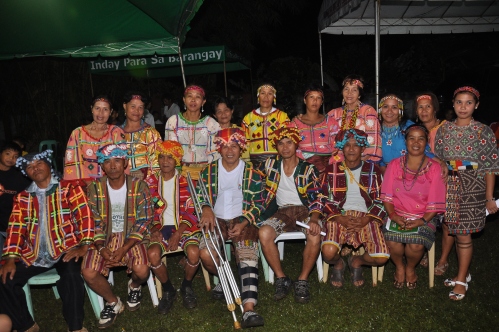
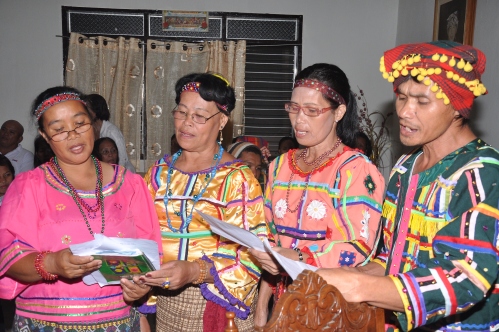
women sing praises and hymns

women sing praises and hymns


However it is also believed that from time to time, a soul is allowed to visit the earthly spheres to visit his loved ones and friends and in unusual instances, even permitted to interfere in the affairs of men by way of dreams, miracles or supernatural apparitions.
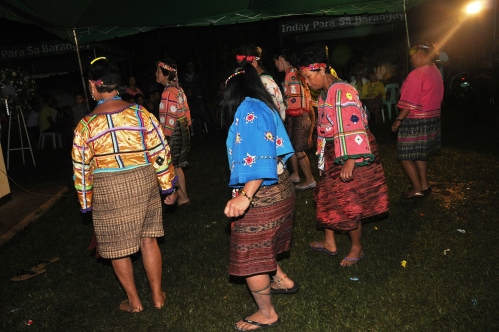
women folk dance to celebrate the deceased journey into the after life

women folk dance to celebrate the deceased journey into the after life

Leave a comment

Filed under Davao Tribal Culture

Durian Fruits and Trees

durian trees (1)
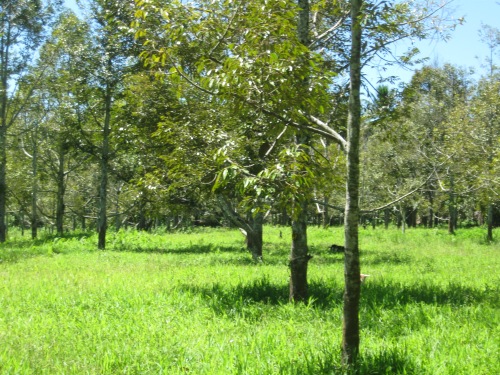
A durian fruit farm at Baguio District, Davao City.
durian trees (2)
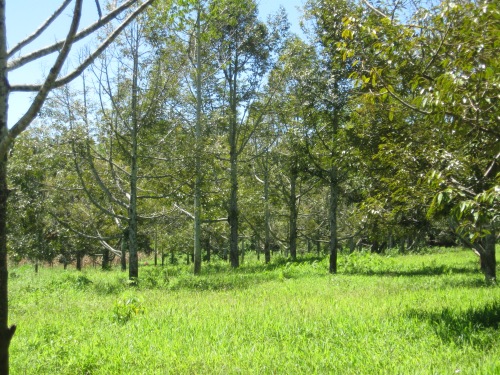
Durian trees are generally cultivated all over the Davao region and understood to have existed in Mindanao even before the arrival of the Spanish era. Durian fruits possess a hard, spiky shell but the flesh is rather soft, juicy and creamy. Though to some the odor seems repulsive, the durian is still and popularly enjoyed in Davao.
durian trees (3)
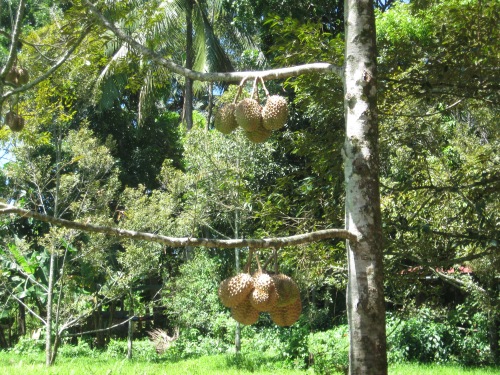
Durian fruits hang over a tree. “Smells like hell, but tastes like heaven”, others have said.
durian trees (3)
When a durian fruit becomes ripe, it just falls from a tree.

Leave a comment

Filed under Photo Explorer

Warrior Society

Bagobos of Davao region, especially in the olden days are reputed to be fierce warriors. They are very protective about their ancestral lands and boundaries and carry a serious-like demeanor wherever they go. Being uptight about the concept of social respect, they rarely laugh or smile about especially when dealing with outsiders or foreigners. They are diplomatic however and carry about themselves an aura of ancient dignity and power. However, when situations call for a tribal war or pangayao, the Bagobos offer their ritual prayers to their war-deity called Mandarangan, and thereby asked for his protection and victory against their enemies. Mandarangan’s home is supposedly on the mount of the Apo.
bagobo warriors
Then a war party is thereby commissioned. Led by a Datu or Magani wearing his blood-red suit, young and veteran warriors hasten to the lair of their enemies. A pangayao is impelled by theft, murder or killing of a relative, breaking of a taboo, kidnapping of a wife or child or even trespass to ethnic borders.
bagani
To assure a winning outcome of the conflict, Bagobos resort to ambuscades, surprise attacks, poisons or even magic. In their weapon inventory, they have swords called palihuma, krisses, spear, bows and arrows and their kaasag or shields. Thus, the opposing tribe may have to defend themselves in a similar fashion. On occasion of obtaining slaves and women, Bagobos will even conduct hostile raids on Bilaan territories in Davao del Sur. Bilaans are also a group of people found particularly in Malita, Davao del Sur.
Bagobo striking a hard pose
Bagobos have also met formidable foes in the past.
The Muslim tribes. There are ancient stories recalling of skirmishes between the Bagobos and their neighboring Muslim brothers.

Maguindanao

Maguindanao


Bordering the Davao highlands and North Cotabato where most Bagobo territories are situated, is the landlocked region of Maguindanao. This is the home of the powerful Maguindanao Sultanate. Home of the powerful Sultan Dipatuan Kudarat. Leader of the war campaign waged against the Spanish colonial forces in the mid 1600’s. It is said that there were border skirmishes that involved both people.
Sultan-Kudarat-map
In fact, in the work of Historian Heidi K. Gloria, The Bagobos: their Ethno history and Acculturation, 1987, an account was made on an encounter between the two: the Bagobos using a kind of magic as defense against the invading “Muslims”.
Sultan Dipatuan Kudarat

Sultan Dipatuan Kudarat


Thus it is quoted, “My Grandfather, Datu Gapao, used to tell me that wars were very common between the Moros and the Bagobos in the past. The Bagobos possessed knowledge of the art and craft of warfare, so that eventually the Moros gave up fighting us. As an example, one of our techniques is called “pagtangka”, a charm which is placed along the path, e.g. a river, of enemies. As soon as the Moros step on the water where the pagtangka has been placed they will begin to feel strange and would not want to travel further. Another art known to us Bagobos is that of the felling all the banana trees of the enemy with just one arrow. Still another is the “kasin”, which is spun around a surface on which a sketch of the enemy territory is drawn. Wherever the kasin falls when it stops spinning, all the Moros found in that direction will die.”

Leave a comment

Filed under Davao Tribal Culture

T’boli

Lake Sebu, South Cotabato

Lake Sebu, South Cotabato

The T’bolis are one of the most prominent group of non-Muslim tribes located in the southwestern side of Mindanao. They inhabit several settlements by the beautiful Lake Sebu in South Cotabato.
The T’boli kinship system is largely paternalistic. They are headed by a Datu or Chieftain, whose charisma, knowledge, leadership and physical prowess account for his decision-making duties in the tribe.
Going by tradition, you will find a large house in a T’boli village. Termed locally as “gono-bong”, this particularly large house is being used for rituals and tribal ceremonies.
Being surrounded by fields and a rich soil, the T’boli tribes resort to the cultivation of sugar cane, potato, corn, coffee and a highland rice variety known to them as “teneba”. They also have domesticated animals and chickens. The ownership of a horse among the tribesmen surprisingly denotes a “high economic stature” in their society.
T’bolis also manufacture an abaca-based textile called “tinalak”. As with other indigenous tribes of the region, the abaca is also cut, stretched, dried, painted and colorfully woven to produce a multi-colored clothing material.
They also manufacture bronze and brass-based ornaments such as bells, beads, figurines, betel nut containers, gongs and various other farming and hunting implements. These products are currently exhibited and sold to tourists at Lake Sebu.
In the same community, the oldest male usually takes charge of all the property and affairs of the clan upon the death of the patriarch or father. In an instance of an extended family, he adopts the other children and other family members as his own.
Even today in an age of development aggression, there are still many T’bolis in Lake Sebu. And many of them are struggling peacefully to preserve their last remaining cultures.

Leave a comment

Filed under Hiker Trail

Siquijor

Biyahe

Kaniadtong panahon sa akoang kabatan-onan, madunggan ko lang nga daghan daw kuno ug mga mamamarang dinha sa Siquijor.

Kuyaw daw kuno dinha kay pirti daw kakusog ang ilahang mga barang, unya kulam, vodoo o black magic ba kon sa lain pang sinultihan. Kon magbinuang gani ka, dili lang kay paburot sa imohang tiyan ang imong maabtan. Pahubagan ka gyud ug maayo unya paantusun ka hangtud sa mukuyos na lang gyud ang imong lawas kutob sa mamatay.

Tingala gyud ko.

Mao tong’ akoang gisuruyan ang isla sa Siquijor atong Oktubre sa 2011. Manila-Dumaguete-Siquijor, ug vice-versa and akoang ruta.

Kapin usa ka oras ang biyahe pinaagi sa lantsa nga mugikan pa sa Dumaguete port area. Lami ang hangin ug matin-awon ang mga balod padulong ngadto sa Siquijor. Matahum usab ang pagkamingaw nga hulagway sa isla nga akoang nasayran.

Sa akoang pagpaniid sa akoang dapit, adunay mga tigsuruyang langyaw nga akoang nakauban sa lantsa, apil na ang ilahang pamilya ug mga mapasi-awung kahigalaan.

Dung-go

Sa pagdung-go pa lamang sa lantsa, kay sus, mura na ko ug gitagbo sa pagka-pirtiiiing kamingaw. Wala ko’y nadunggang radio, tv o kusog ba nga mga pangatawa sa bata. Matay, mura ma’g engkantohonon ang lugar diri.

Hilom ug mapamatikdan kaayo ang mga tawo’ng nagtindog-tindog didto sa gawas sa gate sa pier.

Pagkagawas nako, namakyaw dayon ko ug habal-habal padulong ngadto sa Coral Cay beach resort aron nga maka check-in nasab ko. Dayon ugma, lahuson pa nako ang usa ka babayeng mananambal ngadto sa San Antonio hills.

Habal-habal

Pagka-ugma sa buntag, human sa pagpamahaw sa resort nga pinuy-an, namakyaw nasab ko ug motor aron makalahus ko didto sa balay sa usa ka mananambal nga bantog kuno kaayo dinhang dapita. Kay nagkasinabot na mi sa drayber, iyaha kong gidala didto sa may kabukiran sa San Antonio padulong ngadto sa akoang tinuyuan.

Mingaw kaayo ang mga karsada. Bisan pa ug sementado na, wala kaayo’y sakyanan nga magpahimulos ug biyahe sa kadalanan kay mura man ug dili kaayo kusog ang pagpatigayon ngadto sa isla. Habal-habal ra gani ang akoang malantawan didto sa mga ginagmay nga poblacion ug minus pud kaayo ang mga sakyanan nga pribado.

Matud pa sa drayber, but-an daw kuno didto ang mga tawo sa isla. Wala kuno’y magbinuang didto kay mahadlok man uruy sila ug barangon. Iyaha pa kong gipanghutana sa akoang maayong tuyo didto sa San Antonio. Akoa siyang gitubag nga adona ko’y “referral” nga “healer” ngadto nga makatabang sa akoa. Sulti ko nga “mag-upgrade” kuno ko ug “habak”.

Hehehe. Iya kong nasabtan dayon.

Dagha’g mga balete ug mga karaang kahoy nga akoang nakita sa amoang pagbiyahe pasaka sa bukid. Lab-as pa kaayo ang mga talan-awong kalasangan didto. Lunhaw pa kaayo. Layo ra gyud ang Manila.

Matud pa nako, maayo na lang kay mabinantayon ang mga molupyo didto sa ilahang mga butang nanaglibot hilabi na ning kinaiyahan.

Sa wala pa makaabot ug treynta minutos, nakaabot dayon mi ngadto sa balay. Adunay naglingkod-lingkod didto nga babaye nga nagpaila-ila nga mananambal. Gi-diretso pud nako ug tubag nga siya ma’y akoang tuyo unya mu-remedyo pa gyud unta ko ug mga tambal.
Iya kong gipalingkod dayon sa bangko sa gawas sa iyahang payag. Misulod usab siya sa payag ug gitigum niya ang mga botelya, mga dahon-dahon, mga pinutos nga wa mailhi unya iyahang gidala sa akoang atubangan.

“Pagpili lang ser”, matud pa niya. “Bisan asa dinha, makatabang gyud nimu”. Gidungag pud niya, “Gidaot ba diay ka sir?”.

“Wala man, dungag-dungag lang gud, panagana”, matud pa nako.

“Tama na ang usa ser uy, mag-dungag pa ba diay ka ug asawa?”

Hastang katawa nako! Sakpan lang diay gihapon ‘ta. Mura man pud ko ug nag-grocery ug mga habak didto apil na ang mga lumay .

“Hala, pagpili nalang gud ser”, matud niya.
Aduna ko’y gipili nga mga botelya, mga pinutos ug mga lain pang butang nga akoang tan-aw adunay kahumot sa espirituhanong kagahum.
Nalipay ko sa akoang pagpili unya, gibaylohan nalang gyud nako ug kwarta ang mga gi-angkong butang. Mura napud ug silbing hinabang nako kanilang mga kab-us nga mananambal ang pakigsuki sa ilang panginabuhi.

Dayon, biyahe nako pauli ug mapasalamaton kaayo sa usa ka diyutay nga higayon, nakasuroy ko sa kahibulongang isla sa Siquijor.
siquijor

1 Comment

Filed under Hiker Trail

Bikol

Kadtong milabay nga tuig sa 2011, nakasuroy ko ug Bikol. Ngadto sa isla sa Catanduanes human unya mihapit sa dakbayan sa Tabako, Legazpi ug Daraga, Albay. Tinuod wala ko magdugay ug puyo ngadto sa maong mga lugara pero buot nakong nasaksihan ang ka-nindot sa mga talanawon didto.

Sa Bikol, daghan kaayo ug mga simbahan ug mga unibersidad nga gitukod sa mga Katsila sa panahon sa kadaugan sa 1742. Apil na ning Bicol University, Aquinas ug Ateneo. Makit-an pud didto ang kadaghanan sa mga kapilya, hilabi na sa isla sa Catanduanes, nga sa kada kalye adunay “chapel”.

Relihiyoso gyud kaayo ning mga Bikolano. Mao diay nga sa kadaghanang higayon, mosu-ung gyud ang mga ulitawo sa pagka-diosnon nga kinabuhi. Musolod sila sa pagka-pari.

Adunahan pud gayud ang kabikolan sa mga kakahoyan. Adunay narra, lawaan ug abaca nga gi-eksporte sa laing nasud.

Beautiful Narra furnishings at a local museum in Catanduanes island

Kay duol ang kabikolan sa dagat-pasipiko, malabyan kanunay ug unos o bagyo ba ang rehiyon. Mao nang limbatianon kaayo ang panahon didto basta sa panahon sa tig-uwan.

Seafront facing the Pacific, Catanduanes

Siyempre, dili pud mahikalimtan ang pinalabing sud-an o subak ba sa mga bikolano: ang Sili.

Bisan pa’g halang kaayo, suklan gihapon nila ang kalami sa Sili. Mura ug nahimo na nilang ordinaryo ang pagkaon niini.

Ooops, a surfboard!

Edukasyon kaayo ang akoang paglaroy-laroy didto.

Mubalik nasab ko. Sigurado!

1 Comment

Filed under Hiker Trail